
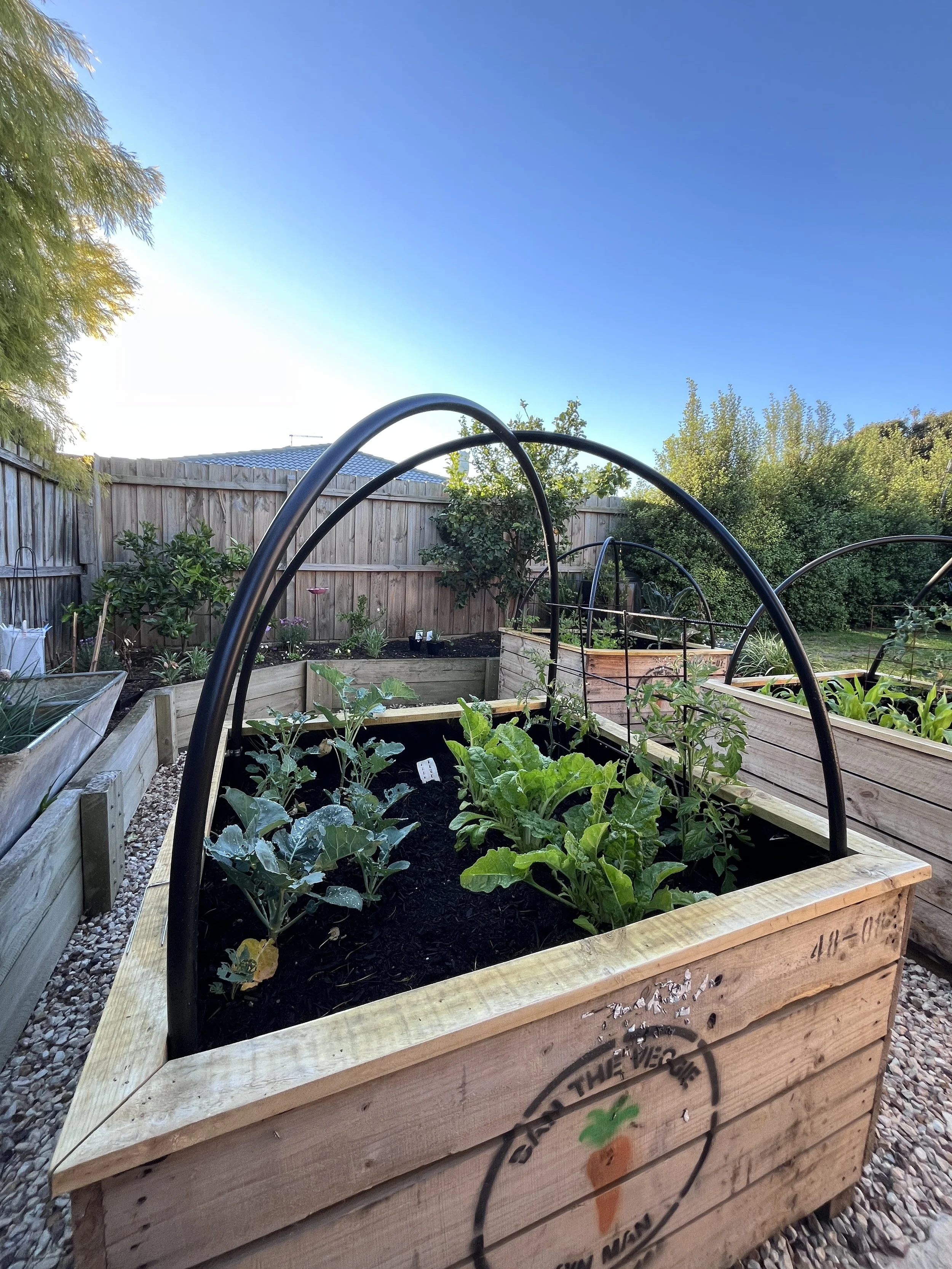
Vegetable Garden in Apple Crates
I was listening to Rebekah Lyons, a passionate mental health advocate, speak the other day and something she said really resonated with me.
She spoke about the importance of replenishing ourselves through activities that involve our hands, particularly when we spend much of our working day using our minds. And gosh, did that hit home!
Lately, I've thoroughly enjoyed creating a little farm in my backyard. Notice how I've upgraded from calling it a veggie garden to a farm? Big dreams over here! But in all seriousness, there's something quite powerful about this concept.
Our brains need a different kind of rest
Many of us spend eight or more hours a day thinking, planning, problem-solving, making decisions, sitting at computers or supporting others emotionally. And while we might not be physically exhausted at the end of the day, our brains certainly can be.
From a cognitive perspective, engaging in hands-on activities such as gardening, cooking, painting, knitting, woodworking or playing music can offer our minds a welcome change of pace. These activities shift our attention away from constant mental demands and towards something practical, sensory and often repetitive.
Interestingly, when we engage in familiar, enjoyable activities that don't demand all our attention, our minds can continue to reflect on thoughts and experiences in the background. Ever noticed how a solution to a problem suddenly appears while you're gardening, walking or doing the dishes? That's partly because stepping away from focused problem-solving can create space for different kinds of thinking.
What does this have to do with burnout?
Quite a lot, actually. When we're constantly thinking, worrying, planning and responding to the needs of others, we can gradually accumulate mental and emotional fatigue. Without opportunities for recovery, ongoing stress can contribute to irritability, difficulty concentrating, reduced motivation, emotional exhaustion and, in some circumstances, burnout.
And here's the interesting part.
Rest doesn't always mean sitting still or doing nothing. Sometimes, it means doing something completely different.
Using our hands can provide a sense of accomplishment, enjoyment and connection with the present moment, without the same cognitive demands we experience throughout our working day. Of course, not every hands-on activity will feel restorative to everyone. The key is finding something you genuinely enjoy, rather than adding another obligation to your already busy life.
Finding your own version of a backyard farm
For me, it's been planting vegetables, moving soil, building garden beds and watching something grow. There's something incredibly satisfying about stepping away from a day of conversations, clinical thinking and decision-making to focus on something as simple as planting a seed. And perhaps that's the real message here.
We spend so much time looking after our responsibilities, our families, our work and the people around us that we sometimes forget our minds need looking after, too. Not everything we do needs to be productive, purposeful or another item ticked off the list. Sometimes, the value is simply in the enjoyment of doing it. So, whether it's picking up a paintbrush, baking something delicious, getting your hands dirty in the garden or finally starting that little project you've been thinking about, perhaps it's worth making some space for it.
Because sometimes the best way to give your mind a rest is to put your hands to work.
And who knows? Your little veggie patch might become a farm, too!