
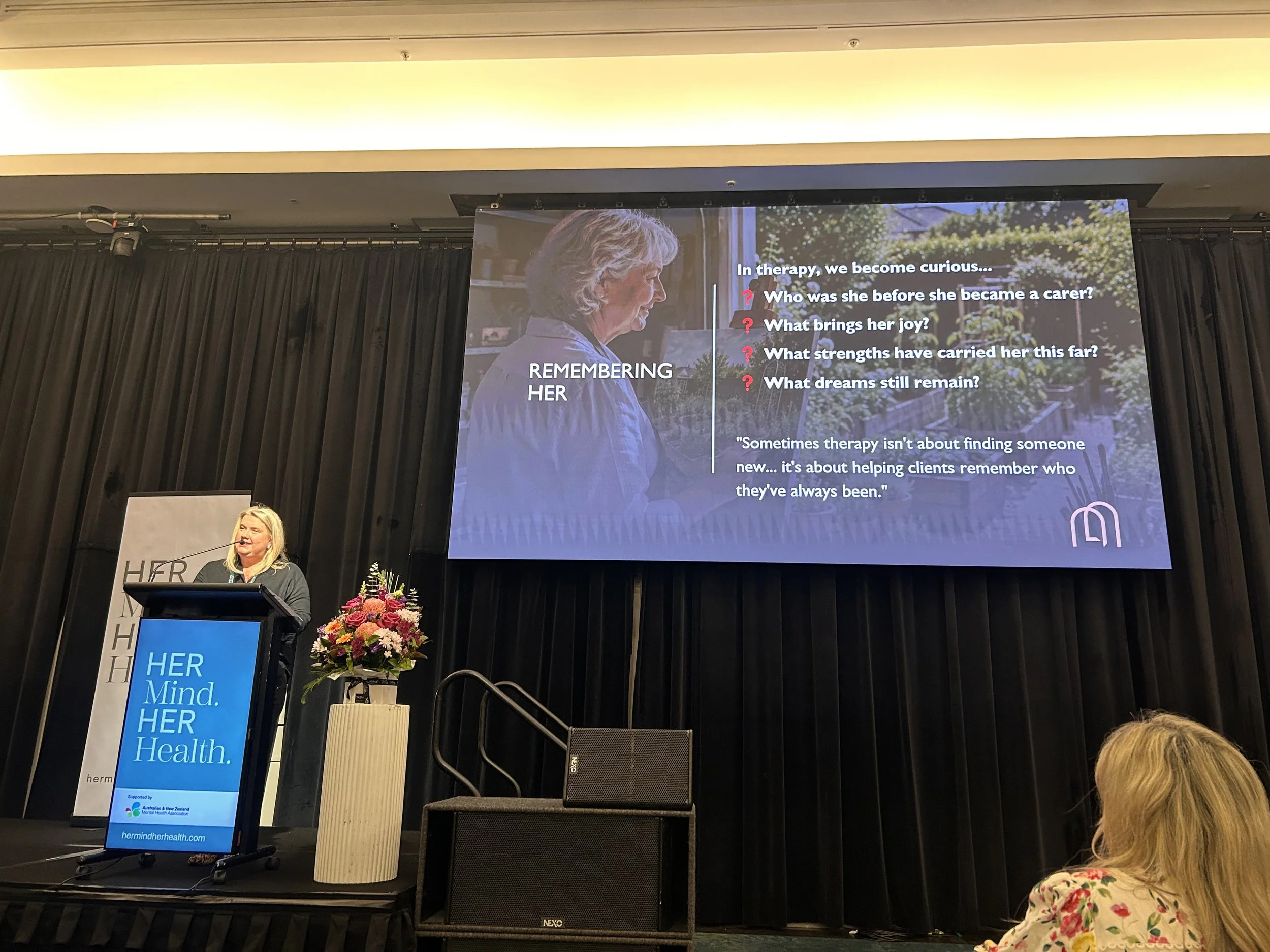
Lady presenting at a conference
Recently, I had the privilege of presenting at the Her Mind Her Health National Conference on a topic close to my heart: "I'm Lost, He Is Lost, and I Have to Say Goodbye."
My presentation explored the often invisible grief experienced by women caring for partners living with dementia. It's something I see regularly in my counselling work, and something we simply don't talk about enough.
Understanding Ambiguous Loss and Grief
We often associate grief with death. But grief can also occur when someone we love is still physically present, yet the relationship we once knew has changed.
Psychologist Pauline Boss introduced the concept of ambiguous loss to describe losses that occur without clear endings or closure.
For those caring for someone living with dementia, this might mean grieving the conversations that have disappeared, the companionship that feels different, or the person who once supported you but now relies on you for almost everything.
The emotional experience associated with this loss is sometimes described as ambiguous grief.
You can love someone deeply and still grieve the life you have lost together.
The Invisible Grief of Caring
One of the most powerful things I hear from carers is, "I feel lost."
Many describe feeling lonely despite rarely being alone. Others speak of guilt, frustration, sadness and exhaustion, often alongside enormous love and commitment.
Carers can find themselves caught between two worlds: wanting to hold on to the person and life they remember, while continually adjusting to the changes unfolding around them. Somewhere along the way, they may also begin to lose their own sense of identity and because their loved one is still here, they may feel they don't have permission to grieve.
However, grief isn't only about death. It's also about changes in companionship, independence, connection and the future we thought we would have.
Who Cares for the Carer?
At Next Door Counselling & Consultation, we understand that carers don't always need more advice about being resilient. Many are already demonstrating extraordinary resilience every single day.
Sometimes they simply need a safe space to be heard, to acknowledge their feelings without judgement and to reconnect with themselves beyond their caring role.
Ambiguous loss doesn't always have a clear ending but understanding and naming the experience can help carers make sense of their emotions and feel less alone.
Sometimes the person doing all the caring needs someone to care for them, too.
At Next Door Counselling & Consultation, we provide compassionate, practical counselling support for carers navigating dementia, changing relationships and grief and loss.
We offer appointments in Mornington and Capel Sound, home visits across the Mornington Peninsula and phone and online counselling Australia-wide.
You don't have to navigate it alone.