
Victorian Redress Scheme - Our Story
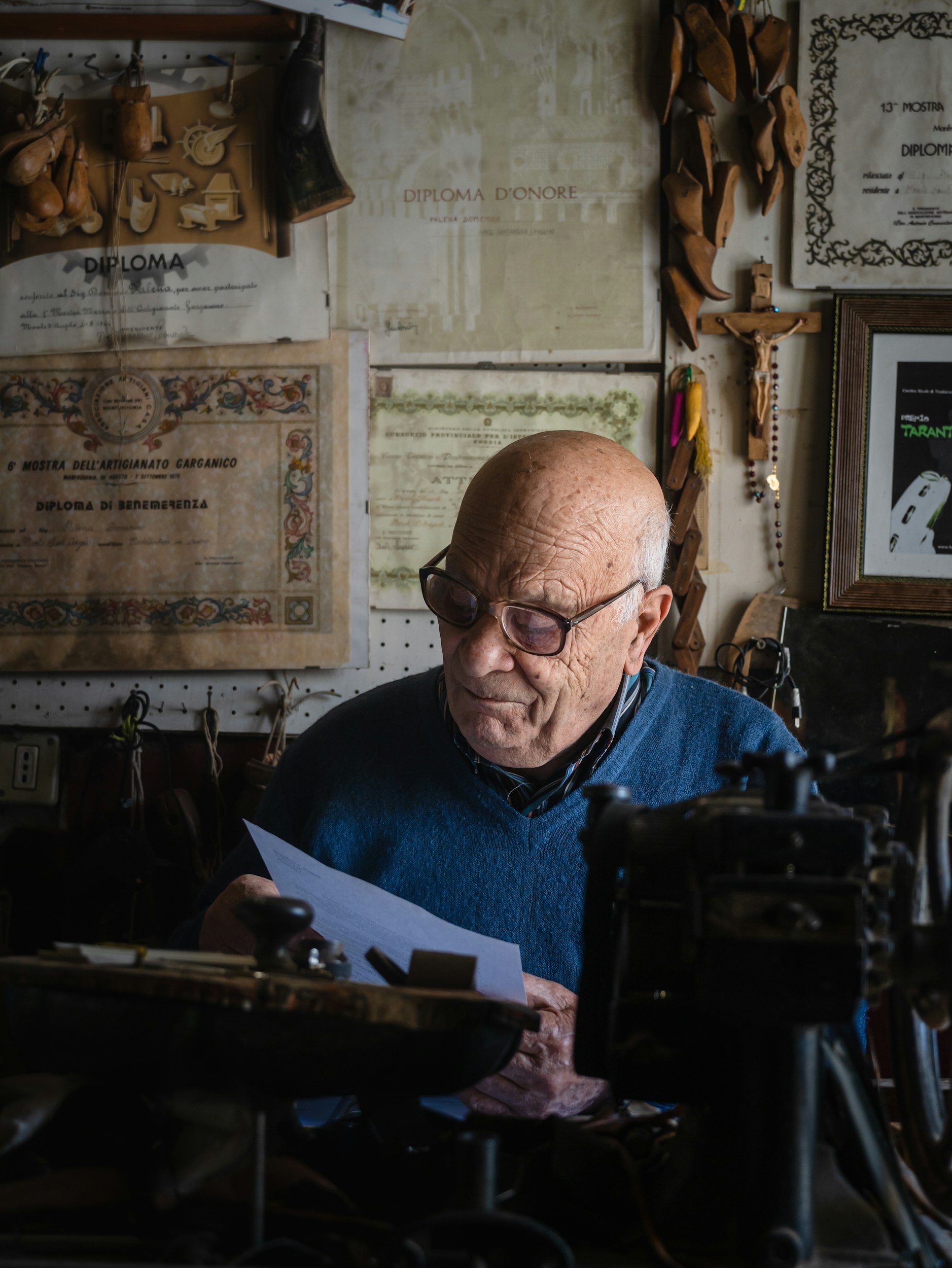
A senior man looking at documents from his past.
Receiving an offer through the Victorian Redress Scheme can bring up a lot of different feelings.
For some people, there may be relief. For others, uncertainty, frustration, anger or simply a sense of “What’s the point now?”
I understand that hesitation.
Before joining Next Door Counselling & Consultation, I worked at Relationships Australia Victoria supporting people with their Victorian Redress Scheme applications. It was meaningful work that taught me a lot about the courage it can take to engage with a process that asks you to consider experiences from many years ago.
I also came to understand why counselling may not feel like an obvious next step.
You might be thinking:
“I’ve dealt with this on my own all these years.”
“Why would talking about it now make any difference?”
“I wasn't believed by people close to me. Why would I trust another professional?”
There may also be feelings of anger or injustice that have been carried for many years — particularly when you haven't felt heard, believed or understood by the people around you, or when experiences in institutional care have continued to have an impact on different parts of your life.
These feelings make sense.
And they are welcome in the counselling room.
So, what is counselling through the Victorian Redress Scheme?
At Next Door Counselling & Consultation, we understand that counselling doesn't have to mean sitting down and retelling everything that happened.
There is no expectation that you revisit your experience in institutional care.
You don't have to prove anything to us. You don't have to tell your story in a particular way. And you don't have to arrive knowing what you want from counselling.
You are the expert in your own life.
Our role is to walk alongside you, listen, and create a space where you can decide what feels useful for you — whether that's making sense of what is happening now, talking about relationships, navigating anger or injustice, finding ways to reconnect with yourself, or simply having somewhere safe to put down some of what you've been carrying.
Our approach is trauma-informed, strengths-based and person-centred. Most importantly, it is grounded in respect for your lived experience and your right to decide what happens next.
Three things to know before you walk through our door
1. We are guided by your experience.
You are the expert in your own life, and your lived experience guides the work we do together. There is no expectation that you revisit your experience in institutional care or share anything you don't want to. We can start wherever feels right for you, including with what is happening in your life today.
2. Trust and connection are at the heart of our approach.
Our approach to counselling is relational. We believe that warmth, genuine connection and being treated with respect matter.
For some people, the idea of entering a counselling space or sitting with another professional may bring up uncertainty. Particularly if past experiences with professionals or institutions have left you feeling unheard, dismissed, judged or treated without compassion.
We understand that a counselling relationship can feel very different when it is built on warmth, respect and genuine human connection.
We don't take your trust for granted. We take the time to build a relationship with you — one where you can be yourself, where your experience is respected, and where you remain in control of what feels right for you.
3. You get to decide what makes counselling worthwhile.
There isn't one right way to use your counselling sessions. You might want somewhere to talk openly, explore what is happening for you now, find practical ways of navigating difficult feelings or relationships, or simply have someone listen and understand.
Our role isn't to tell you what you should do or how you should feel. We work collaboratively with you, drawing on your strengths, knowledge and experience to support what matters to you.
A final thought
One of the most meaningful things I took from my time supporting people through the Victorian Redress Scheme was seeing the strength, resilience and determination people had carried with them for so many years.
That strength doesn't disappear because you accept support.
Counselling isn't about fixing you, changing you, or asking you to revisit experiences you don't want to revisit.
It's about having a space where your experience is respected, your strengths are recognised, and you remain in control of your own story.
If you've received a Victorian Redress Scheme offer that includes counselling and you're wondering whether it's worth taking that first step, you don't have to have it all figured out.
You can simply start with a conversation.
There is no expectation to revisit your past. There is simply an invitation to connect.
*To confidentially discuss your own experience, reach out to Renee today.